Neon Nights — The Magic Of Summer Bioluminescence In The Bahamas
There’s nothing quite like a calm night watch on the Sea of Abaco during the midsummer months. But if you’re looking at just the stars above, you’re missing half the show.
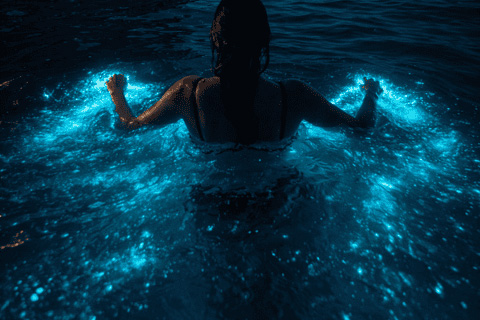
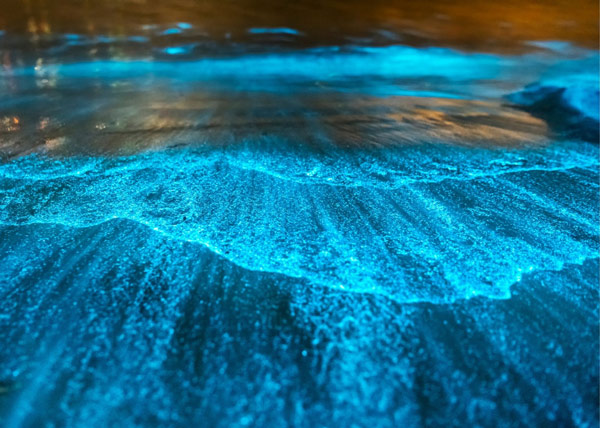
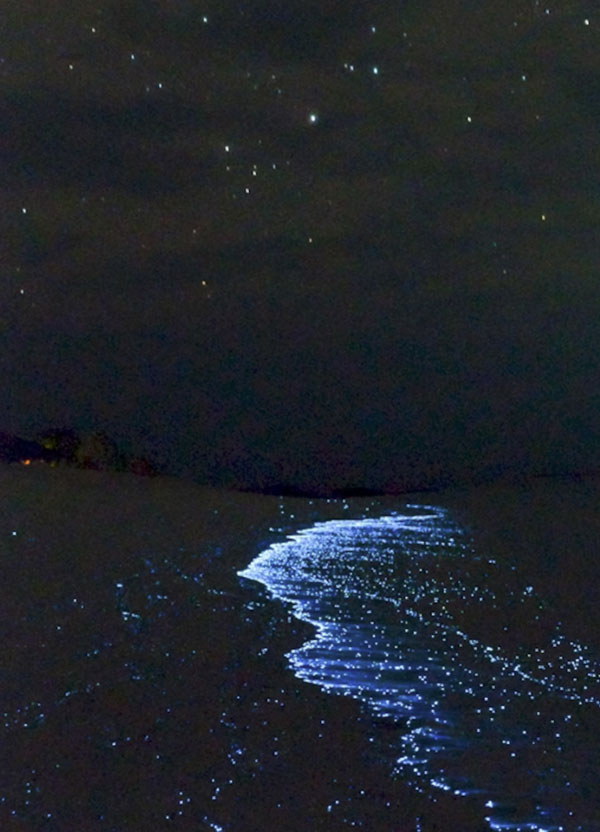
Right now, beneath the surface, a spectacular natural phenomenon is coming alive: Ocean Bioluminescence.
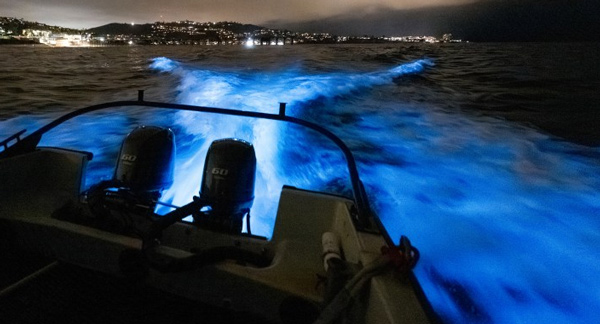
If you’ve ever seen your yacht’s wake suddenly light up with an electric-blue glow, or watched a school of fish dart through the darkness leaving trails like underwater comets, you’ve witnessed this magic firsthand.
🔬 The Science Behind The Glow
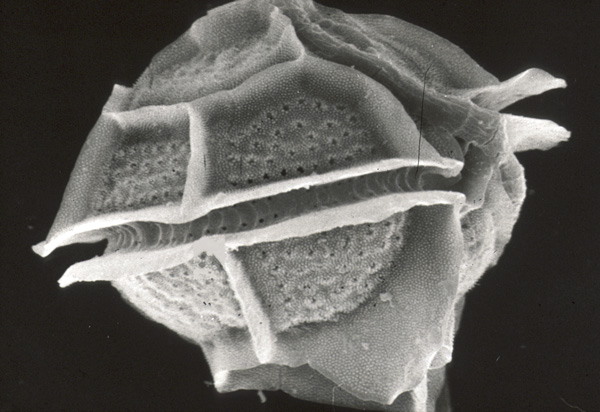
And here’s a fun piece of local trivia for your next cocktail hour on the flybridge: This tiny organism was actually first discovered and classified right here in the Bahamas, near New Providence Island, back in 1906.
Here’s what one of these plankton looks like up close:
⚙️ How Does It Work?
✔️ The Trigger: When these tiny organisms experience motion or friction — like a hull slicing through a bay, a spinning propeller, or a sea turtle swimming by — a chemical reaction occurs inside them, creating that unforgettable streak of light.
✔️ The Reaction: Think of it like nature’s ultimate glow stick. When the plankton is disturbed, two natural compounds inside it mix with oxygen. This instantly converts that chemical energy into a burst of “cold light” — producing a pure, brilliant glow with absolutely zero heat, lasting for just a fraction of a second.
✔️ The Timing: This phenomenon peaks during the warm summer months when water temperatures climb, and the wind dies down, creating the perfect conditions to see the glow clearly.
💡 Did You Know?
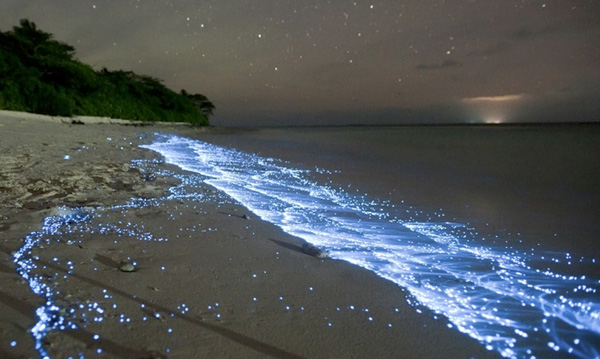
If you break down the Greek and Latin roots of the scientific name for this microscopic plankton (Pyrodinium Bahamense) – it literally translates to “The Whirling Fire Of The Bahamas.” A perfectly fitting name for a creature that turns our waters into a sea of liquid neon.
⛵ How to Experience It On Your Next Cruise
The best way to witness bioluminescence is on a pitch-black night during a new moon, far away from marina dock lights.
Take the dinghy into a quiet, mangrove-lined anchorage like the shallow, protected bays around Little Harbour or the northern creeks of Manjack Cay. Kill the engine, stir the water with a paddle, or watch the anchor chain drop, and you’ll see the water explode into a brilliant neon light show.
Here’s a short clip recently shared with us, showing active bioluminescence from the stern of a yacht charter in Little Harbour:

🏝️ Bioluminescence Beyond The Abacos
While the Abacos offer incredible, secluded pockets of this nighttime magic, you’ll find variations of it across the Bahamas.
If you’re cruising beyond the Abacos this summer, here’s where this phenomenon shines brightest:
✔️ Great Exuma: Widely considered a premier spot for a “sparkling water” experience, where night kayaking tours let you watch the water erupt in bright neon-blue with every paddle stroke.
✔️ Eleuthera’s Mangrove Creeks: The calm, highly saline, and nutrient-dense waters surrounded by Eleuthera’s mangroves create the perfect natural incubator for these plankton.
✔️ Nassau & Paradise Island: While city lights usually block the view, local eco-tours safely navigate guests out to the dark, hidden coastal lagoons nearby to witness seasonal blooms away from the light pollution.
⚓ Pro Tip: Planning Your Night Run
For the absolute best light show, you have to sync up with nature’s clock. Keep these three golden rules in mind:
1. Track The Moon Phase: Always aim for a new moon or a heavily overcast night. Even a sliver of a bright moonlight can wash out the delicate, neon-blue glow.
2. Target The Warmest Months: Plankton populations peak in warm, slow-moving water. The summer and early autumn stretch (June through October) delivers the most intense displays.
3. Avoid Heavy Rainfall: Try to plan your night excursions during dry spells. Heavy, fresh rainwater runoff lowers the salinity of coastal bays, which can dim or hinder the planktons’ ability to light up.
➿ The Dual Nature Of The Glow
When conditions are perfect and the plankton reproduces rapidly, it can create dense blooms. During these heavy blooms, the plankton produces potent neurotoxins called Paralytic Shellfish Toxins (PSTs).
While swimming in bioluminescent waters is completely safe, these toxins accumulate in local filter-feeders like clams and certain reef species.
If you or your crew plan on harvesting local shellfish or doing some reef fishing during the peak warm weather months, always check local marine advisories first.
It’s a powerful reminder that the ocean’s most beautiful sights command the greatest respect.

🔥 Ready To See The "Whirling Fire" For Yourself?
954.727.5078 | 242.577.0826
Visit our Book Now page to start customizing your dream charter.
Location & Hours
Marsh Harbour, Abaco, Bahamas
Monday – Friday: 8am-5pm
Saturday & Sunday: 9am-5pm